


What Is Web Hosting? Types, Features & Benefits
You built a website. The design is done. The content is written. Everything looks exactly the way you imagined it.
Now what?
For anyone to see that website — for it to exist on the internet at all — it needs to live somewhere. It needs a home. A physical place where its files are stored, where servers keep it running around the clock, where every visitor who types your address into their browser can find it instantly.
That home is web hosting.
Web hosting is one of those foundational concepts that sits underneath everything else on the internet, so fundamental that it often goes unnoticed — until something goes wrong. Understanding what it is, how it works, and which type is right for your situation is one of the most important decisions you will make for any online project.
This guide explains everything you need to know.

What Is Web Hosting?
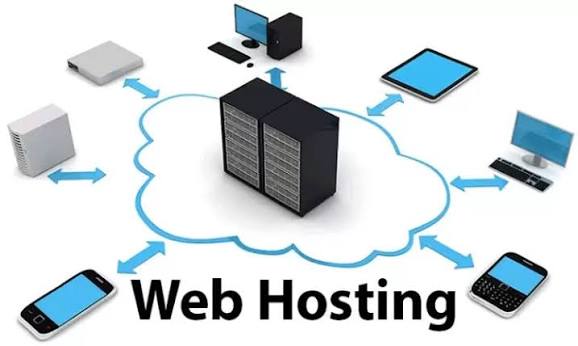
Web hosting is a service that provides the technology and infrastructure necessary to make a website accessible on the internet. When you purchase web hosting, you are renting space on a server — a powerful computer that runs continuously, stores your website’s files, and delivers them to anyone who visits your site.
Think of it this way. Your website is like a physical store. Web hosting is the building in which that store operates. The domain name — your website address — is the street address that tells people where to find it. Without the building, the store cannot exist. Without web hosting, the website cannot be accessed.
When someone types your domain name into their browser, the browser sends a request to the server where your website is hosted. The server retrieves your website’s files and sends them back to the browser, which renders them as the page the visitor sees. This entire process happens in milliseconds, so seamlessly that most people never think about it.
The quality of your web hosting affects almost everything about your website’s performance — how fast pages load, how reliably the site stays online, how securely it is protected, and how well it handles traffic as your audience grows.
How Web Hosting Works
Understanding the basic mechanics of web hosting helps you make better decisions about which type you need and what to look for in a provider.
Every website consists of files — HTML documents, CSS stylesheets, JavaScript files, images, videos, databases. These files need to be stored somewhere that is connected to the internet at all times, so that anyone anywhere in the world can access them on demand.
Web hosting companies operate large data centers — facilities filled with servers, redundant power supplies, cooling systems, and high-speed internet connections. These data centers are engineered to stay online continuously, often with multiple layers of redundancy to prevent downtime.
When you sign up for web hosting, you are allocated space on one of these servers. You upload your website files to that space. The hosting provider ensures that those files remain accessible, that the server stays online, and that the connection is fast enough to deliver your pages quickly to visitors.
The web server software — Apache, Nginx, and Microsoft IIS are the most common — handles incoming requests, finds the right files, and sends them back to the requesting browser. For websites that use databases — most modern websites do — database software like MySQL runs alongside the web server, retrieving and storing dynamic content.
Types of Web Hosting
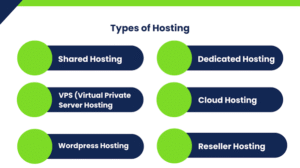
Web hosting comes in several distinct types, each suited to different needs, different scales, and different budgets. Choosing the right type is as important as choosing the right provider.
Shared Hosting
Shared hosting is the most common and most affordable type of web hosting. In a shared hosting environment, your website shares a server with many other websites — potentially hundreds of them — all using the same pool of resources including processing power, memory, and storage.
The primary advantage of shared hosting is cost. Because the server’s resources and operating costs are divided among many customers, the price for each individual customer is very low. Plans often start at just a few dollars per month, making shared hosting accessible to individuals, small businesses, and anyone just starting out online.
The primary disadvantage is resource sharing. If another website on the same server experiences a sudden traffic spike, it can consume a disproportionate share of the server’s resources, slowing down your website in the process. This is often called the “bad neighbor effect.” Because you have limited control over the server environment and limited access to technical configuration, shared hosting is also less flexible than other options.
Shared hosting is ideal for personal websites, small blogs, portfolio sites, and small business websites that do not yet generate significant traffic or require specialized server configurations.
Virtual Private Server Hosting
Virtual Private Server hosting — commonly called VPS hosting — occupies the middle ground between shared hosting and dedicated server hosting. A VPS uses virtualization technology to divide a single physical server into multiple virtual servers, each of which operates as if it were an independent server with its own dedicated resources.
The key difference from shared hosting is isolation. Your website has guaranteed allocations of processing power, memory, and storage that are not affected by other users on the same physical machine. You also have much greater control over your server environment, typically with root access that allows you to install software, configure settings, and customize the environment to your specific needs.
VPS hosting is significantly more expensive than shared hosting but considerably less expensive than a dedicated server. It represents a meaningful step up in performance and reliability, making it a suitable choice for growing websites, e-commerce stores with moderate traffic, and web applications that require more resources or custom configurations than shared hosting can provide.
The main consideration with VPS hosting is that it typically requires more technical knowledge to manage effectively than shared hosting. Managed VPS hosting options are available from many providers, where the hosting company handles server maintenance, security updates, and technical administration on your behalf.
Dedicated Server Hosting
With dedicated server hosting, you rent an entire physical server that is used exclusively by your website or applications. No other customer shares the server’s resources. You have complete control over the hardware, operating system, server software, and configuration.
Dedicated servers provide the highest levels of performance, security, and control available in traditional hosting. Because no resources are shared with anyone else, your website can use the full capacity of the server’s processing power, memory, and storage. This makes dedicated hosting suitable for large, high-traffic websites, resource-intensive applications, and businesses that have strict security or compliance requirements.
The trade-off is cost and complexity. Dedicated servers are significantly more expensive than shared or VPS hosting, and they require either substantial technical expertise to manage or an additional investment in managed hosting services. For most websites, dedicated hosting represents more capacity than is necessary, making it most appropriate for large enterprises or websites that have grown beyond the capabilities of VPS hosting.
Cloud Hosting
Cloud hosting distributes your website across a network of interconnected servers rather than hosting it on a single physical machine. Resources are drawn from this network dynamically based on demand, and if one server in the network experiences a problem, others immediately take over to ensure continuity.
The defining characteristic of cloud hosting is scalability. When your website experiences a sudden increase in traffic — a product launch, a viral social media post, a mention in a major publication — cloud hosting automatically provisions additional resources to handle the load. When traffic returns to normal, those resources are released. You typically pay only for what you actually use.
This combination of scalability and high availability makes cloud hosting particularly well-suited for websites with variable or unpredictable traffic patterns, applications that need to scale rapidly, and businesses for whom downtime carries significant financial consequences.
Major cloud platforms including Amazon Web Services, Google Cloud, and Microsoft Azure offer cloud hosting infrastructure with enormous flexibility and global reach. Many web hosting companies also offer cloud hosting products built on these platforms or on their own cloud infrastructure.
Managed WordPress Hosting
Managed WordPress hosting is a specialized hosting environment optimized specifically for websites built on the WordPress content management system. Rather than providing a general-purpose server environment, managed WordPress hosting providers configure and maintain their infrastructure specifically for WordPress performance and security.
In a managed WordPress hosting environment, the hosting provider handles WordPress-specific tasks including automatic WordPress core updates, WordPress security monitoring, WordPress-specific performance optimization, automatic backups, and staging environments for testing changes before they go live. The server software, caching layers, and database configurations are all tuned specifically for WordPress.
The result is typically faster loading pages, better security against WordPress-specific threats, and a more reliable WordPress experience than you would get from standard shared hosting. The trade-off is that managed WordPress hosting is more expensive than standard shared hosting and is specifically designed for WordPress — it is not suitable for websites built on other platforms.
Managed WordPress hosting is ideal for businesses and individuals who rely heavily on their WordPress website and want the performance, security, and peace of mind that comes from WordPress-specialized infrastructure, without needing to manage those technical aspects themselves.
Reseller Hosting
Reseller hosting allows you to purchase hosting resources from a provider and then resell them to your own customers under your own brand. The reseller acts as an intermediary between the hosting company and end users.
Reseller hosting is primarily used by web developers and digital agencies who want to offer hosting as part of their service portfolio, generating recurring revenue while providing their clients with a unified point of contact for both website development and hosting.
Key Features to Look for in Web Hosting
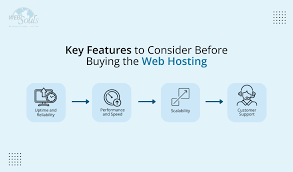
Selecting a web hosting provider involves evaluating a range of features and specifications. These are the most important considerations.
Uptime and reliability is the most fundamental hosting metric. Uptime refers to the percentage of time the server is operational and your website is accessible. Most reputable hosting providers advertise 99.9% uptime guarantees — which sounds excellent but allows for approximately eight and a half hours of downtime per year. The best providers achieve 99.99% uptime or higher. Every minute your website is offline costs you visitors, sales, and credibility. Look for providers with strong uptime track records and transparent uptime monitoring.
Storage and bandwidth determine what your hosting can accommodate. Storage is the space allocated for your website’s files. Bandwidth — sometimes called data transfer — is the amount of data that can be transferred between your server and visitors each month. Many hosting plans now advertise unlimited storage and bandwidth, though this is typically subject to acceptable use policies. For most websites, the limits are generous enough not to be a practical concern, but high-traffic websites or those with large media files should verify the specific limits.
Speed and performance directly affect both user experience and search engine rankings. Factors that influence hosting performance include the quality of the server hardware, the geographic location of the servers relative to your audience, the use of solid-state drives rather than traditional hard drives, the implementation of caching technology, and the availability of a content delivery network. Look for providers that use modern server infrastructure and offer performance-enhancing features.
Security features protect your website and your visitors. Essential security features include SSL certificates — which encrypt the connection between your server and visitors’ browsers and are now essentially mandatory for any website — regular malware scanning and removal, firewalls that filter malicious traffic, DDoS protection that guards against distributed denial-of-service attacks, and regular automated backups that allow you to restore your website if something goes wrong.
Scalability determines whether your hosting can grow with your website. As your traffic and resource requirements increase, you want to be able to upgrade your hosting without migrating to an entirely new provider. Look for hosting companies that offer a clear upgrade path from shared hosting to VPS to dedicated or cloud options.
Customer support quality becomes critically important when something goes wrong — and at some point, something always goes wrong. Evaluate the availability of support — is it available twenty-four hours a day, seven days a week — and the channels through which support is provided, including live chat, phone, and email ticketing. Look for providers with knowledgeable, responsive support teams and strong customer reviews regarding their support quality.
Control panel and ease of use affects how easily you can manage your hosting environment. cPanel is the most widely used control panel in the shared hosting industry, offering an intuitive interface for managing files, databases, email accounts, domains, and security settings. Some hosting providers use proprietary control panels, and others — particularly cloud providers — offer command-line and API-based management. The right choice depends on your technical comfort level.
Pricing and contract terms are practical considerations that affect your total cost of ownership. Many hosting providers advertise very low introductory prices that increase significantly at renewal. Read the renewal pricing carefully before committing. Also consider the length of contracts — some providers require annual commitments, while others offer monthly billing with greater flexibility.
Benefits of Web Hosting for Businesses

Understanding why web hosting matters helps clarify what you are actually investing in when you choose a hosting provider.
Professional online presence is the most immediate benefit. A website hosted on a professional hosting platform with your own domain name communicates credibility and permanence in a way that free website builders with subdomain addresses simply cannot. For businesses, professional hosting is a prerequisite for being taken seriously online.
Reliability and continuity ensure that your customers can always find you. Professional hosting providers maintain redundant infrastructure, continuous monitoring, and rapid response protocols that keep websites online consistently. This reliability is something you cannot replicate on your own without enormous investment.
Performance that supports growth means your website stays fast and functional as your audience grows. Good hosting scales with you, ensuring that success does not become its own problem through slow load times or crashes during traffic spikes.
Security protection guards your website, your data, and your customers. Professional hosting providers invest heavily in security infrastructure, threat monitoring, and response capabilities that individual website owners could not replicate independently. For any website that handles customer data, transactions, or sensitive information, this security infrastructure is not optional.
Technical support provides expertise on demand. Web hosting involves complex technical infrastructure, and problems that arise require specialized knowledge to diagnose and resolve. Having access to experienced technical support means problems get solved quickly, minimizing the impact on your website and your customers.
Email hosting is often included with web hosting plans, allowing you to create professional email addresses using your own domain name. Email from your own domain — [email protected] — communicates professionalism and reinforces your brand in every communication.
Choosing the Right Web Hosting for Your Needs
The right hosting solution depends entirely on your specific situation. There is no single best answer for everyone.
If you are just starting out — building your first website, launching a personal blog, or creating a simple small business website — shared hosting provides all the capabilities you need at the lowest possible cost. Start here and upgrade as your needs grow.
If your website is growing, generating meaningful traffic, or requires specific technical configurations, VPS hosting provides the performance, reliability, and flexibility to support that growth without the cost of a dedicated server.
If you run a high-traffic website, a resource-intensive application, or a business with strict security or compliance requirements, dedicated hosting or cloud hosting provides the performance and control to meet those demands.
If you run a WordPress website and want the best possible WordPress performance without managing technical infrastructure yourself, managed WordPress hosting is worth the premium over standard shared hosting.
If your traffic is unpredictable or you expect rapid growth, cloud hosting provides the elastic scalability to handle variable demand efficiently.
Web Hosting Is the Foundation of Everything Online
Every website you have ever visited is hosted somewhere. Every online store, every blog, every business website, every application — all of it depends on web hosting infrastructure running reliably in the background.
Choosing the right hosting is not just a technical decision. It is a business decision that affects how fast your website loads, how reliably it stays online, how securely it protects your data and your customers, and how well it can scale as your needs grow.
Understanding the types of hosting available, the features that matter most, and how to match hosting options to your specific needs puts you in a position to make that decision with confidence.
Your website deserves a home that is reliable, fast, secure, and built to support your growth. That is what great web hosting provides.