


Local SEO How to Improve Your Local Search Rankings
Someone near you just searched for exactly what your business offers.
They typed it into Google. Results appeared. A map showed up with three businesses highlighted. They clicked the first one, read the reviews, and called to make an appointment.
Was that business yours?
If not, it should have been. And local SEO is how you make sure it is next time.
Local SEO is one of the most powerful and underutilized opportunities in digital marketing. For businesses that serve customers in a specific geographic area, showing up in local search results is not a nice-to-have. It is a fundamental requirement for competing in today’s market.
This guide explains exactly what local SEO is, why it matters, and the specific steps you need to take to improve your local search rankings.
What Is Local SEO?
Local SEO is the practice of optimizing your online presence to attract more business from relevant local searches. These are searches that include a geographic qualifier — “dentist in Baku,” “Italian restaurant near me,” “plumber open now” — or searches that Google recognizes as having local intent even without an explicit location — “best pizza,” “car repair,” “accountant.”
When Google detects local intent in a search, it serves results differently than it does for standard queries. Instead of showing only the standard blue link results, Google typically shows a map with a set of local business listings — commonly called the Local Pack or Map Pack — above the organic results.
Appearing in the Local Pack is enormously valuable. These three positions capture a disproportionate share of clicks for local searches. The businesses in the Local Pack are visible at the top of the page, accompanied by their rating, address, phone number, and hours. For many searches, a user will call directly from the search results without ever visiting a website.
Local SEO determines whether your business appears in that Local Pack, and where it ranks when it does.
Why Local SEO Matters More Than Ever
The numbers behind local search tell a clear story about why this matters.
Nearly half of all Google searches have local intent. People search for local businesses constantly — before going out to eat, before booking an appointment, before purchasing something they need quickly. These searches have high commercial intent and often convert to real-world visits and purchases within hours.
Seventy-six percent of people who search for something nearby on their smartphone visit a related business within a day. Twenty-eight percent of those searches result in a purchase. This is not passive browsing — local search drives foot traffic and immediate revenue.
The rise of “near me” searches has been dramatic. Searches including “near me” have grown exponentially over the past decade, and they continue to increase as mobile usage grows and consumers expect hyper-relevant local results.
For local businesses, this creates a clear opportunity. Customers are actively looking for what you offer in your area. Local SEO determines whether they find you or your competitor.
The Three Pillars of Local SEO
Google’s local ranking algorithm considers three primary factors when determining which businesses to show in local results and in what order.
Relevance refers to how well your business profile matches what the searcher is looking for. A dental clinic appearing for searches about tooth pain is relevant. The same clinic appearing for searches about car repair is not. Building relevance in local SEO means clearly communicating what your business does, what services it offers, and what categories it belongs to.
Distance refers to how far the business location is from the searcher or from the location specified in the search. All else being equal, Google prefers to show results that are physically close to the person searching. While you cannot change where your business is located, you can influence distance by accurately specifying your service area and ensuring your location information is consistent and precise.
Prominence refers to how well-known and authoritative your business is, both online and offline. Google considers factors like the number and quality of reviews, the strength of your website, the number of citations and mentions of your business across the web, and your overall online presence. Prominence is the factor most influenced by active local SEO work.
Your Google Business Profile: The Foundation of Local SEO
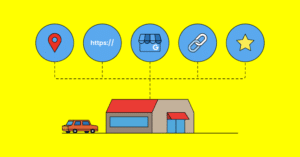
Your Google Business Profile — formerly Google My Business — is the single most important element of your local SEO strategy. It is the source of the information that appears in the Local Pack, on Google Maps, and in the knowledge panel that appears when someone searches directly for your business name.
Claiming and verifying your profile is the first step. If you haven’t done this, stop everything else and do it now. Go to business.google.com, search for your business, and follow the verification process. Verification typically involves receiving a postcard at your business address with a verification code, though Google also offers phone, email, and video verification for some businesses.
Completing every section of your profile is essential. Google rewards completeness. A fully completed profile is more likely to appear in relevant searches than a sparse one. Fill in your business name exactly as it appears on your signage and official materials. Select the most accurate primary category — this is one of the most important decisions you will make in your profile — and add relevant secondary categories. Write a compelling business description that includes your most important keywords naturally. Add your complete address, phone number, and website URL.
Your business hours must be accurate and kept up to date. Nothing frustrates a potential customer more than arriving at a business that Google says is open only to find it closed. Update your hours for holidays, special events, and any changes to your regular schedule. Google allows you to set special hours for specific dates, which you should use for every holiday and unusual closure.
Photos make a significant difference in how your profile performs. Businesses with photos receive dramatically more requests for directions and website clicks than those without. Upload high-quality photos of your exterior so customers can recognize your location, your interior to give a sense of the environment, your products or work, and your team. Keep photos current and add new ones regularly. Encourage customers to upload their own photos as well.
The questions and answers section allows potential customers to ask questions about your business directly on your profile. Monitor this section regularly and answer questions promptly. You can also proactively add frequently asked questions with your own answers — this allows you to address common concerns before they become barriers to conversion.
Google Posts allow you to share updates, offers, events, and news directly on your profile. These posts appear in your knowledge panel and can include a call to action. Use Google Posts regularly to communicate with potential customers, promote offers, and demonstrate that your business is active.
Building and Managing Reviews
Reviews are one of the most powerful factors in local SEO. They influence your local ranking directly through their quantity, recency, and the presence of keywords. They also influence customer behavior dramatically — the average consumer reads ten reviews before trusting a business, and a business’s star rating is the number one factor in whether a consumer will use it.
Generating a consistent stream of reviews requires active effort. The most effective approach is simply to ask. After a positive interaction, ask the customer to share their experience on Google. Make it as easy as possible by sharing a direct link to your review page. Many businesses print this link as a QR code on receipts, packaging, business cards, or signage. Email follow-up sequences that request reviews from recent customers are highly effective for businesses that collect customer email addresses.
Never buy reviews, create fake reviews, or offer incentives in exchange for reviews. These practices violate Google’s terms of service and can result in your profile being penalized or removed. Google is increasingly sophisticated at detecting inauthentic review activity, and the consequences far outweigh any short-term benefit.
Responding to reviews — both positive and negative — is important for several reasons. It signals to Google that you are an active, engaged business. It demonstrates to potential customers that you care about customer experience. And it gives you an opportunity to address concerns publicly in a way that shapes the narrative.
For positive reviews, a brief, genuine thank-you is sufficient. Avoid generic copy-paste responses — personalize each one with a reference to something specific the reviewer mentioned.
For negative reviews, respond with empathy and professionalism. Acknowledge the issue without becoming defensive, apologize for the experience, and invite the reviewer to contact you directly to resolve it. Never argue with a reviewer publicly. Even if the review is unfair or inaccurate, your response is visible to every potential customer who reads the review, and a gracious response to a difficult review often creates a better impression than the negative review destroys.
NAP Consistency: Citations and Local Authority
NAP stands for Name, Address, and Phone number. The consistency of this information across the web is a foundational element of local SEO.
When your business information appears on other websites — directories, review platforms, social media profiles, industry listings — these appearances are called citations. Google uses citations to verify that your business exists where you say it does and to build confidence in the accuracy of the information in your Business Profile.
The challenge with citations is that inconsistency undermines their value. If your business name appears as “Smith & Sons Plumbing” in some places and “Smith and Sons Plumbing Services” in others, and your phone number includes an area code in some listings but not in others, Google struggles to reconcile these variations. Inconsistent NAP signals reduce your local authority and can suppress your rankings.
Auditing your existing citations is the first step. Search for your business name along with your address and phone number to find where your information appears online. Note any inconsistencies and correct them. Priority should go to the highest-authority directories — Yelp, Yellow Pages, industry-specific directories, local business associations, and any platform that appears prominently in search results for your business type.
Building new citations on relevant, authoritative directories extends your footprint. Focus on directories that are relevant to your industry, directories specific to your geographic area, and general business directories with high domain authority. The goal is not maximum quantity but appropriate quality and relevance.
Social media profiles should be treated as citations and maintained with consistent NAP information. Even if you don’t actively use a particular platform, claiming your business profile and filling in accurate information contributes to your local authority.
Local Keyword Strategy

Local SEO requires a keyword approach that accounts for geographic intent. This means understanding not just what your potential customers are searching for, but how their searches reflect their location.
Geographic modifiers are the most obvious element of local keyword strategy. Phrases like “dentist in Baku,” “best pizza Sabunchu,” and “plumber near Narimanov” combine a service with a location. Identifying the specific geographic terms your potential customers use — city names, neighborhood names, district names, landmarks — and incorporating them naturally into your content creates relevance for these searches.
Near me keywords represent a special category. When someone searches “pizza near me,” Google uses their location to determine which results to show. You don’t optimize specifically for the phrase “near me” — instead, you optimize for relevance and proximity so that your business appears when Google serves results for these location-relative searches. Having accurate location information and a well-optimized Business Profile is the key to capturing near me traffic.
Long-tail local keywords often represent the highest-converting search intent. Someone searching “emergency plumber available now in Baku” is in immediate need and ready to call. Someone searching “accountant for small business in Yasamal” has a specific need in a specific place. These longer, more specific queries have lower search volume than broad terms but often drive more qualified leads.
On-Page Optimization for Local SEO
Your website plays an important role in local SEO even though the Google Business Profile is often the primary visible element. A well-optimized website reinforces your relevance and builds the domain authority that contributes to your local rankings.
Location pages are essential for businesses that serve multiple geographic areas or have multiple locations. A single page that mentions every location you serve is less effective than dedicated pages for each location, each optimized with location-specific content, photos, and information.
Your homepage and key service pages should include your NAP information, ideally in the footer so it appears on every page. This reinforces consistency between your website and your Business Profile.
Schema markup — specifically LocalBusiness schema — communicates structured information about your business directly to search engines. Implementing schema markup on your website tells Google your business name, address, phone number, hours, category, and other details in a format that machines can easily read and interpret. This reduces ambiguity and strengthens the signals that support your local rankings.
Content that is locally relevant builds your connection to your geographic area. Writing about local events, local news relevant to your industry, local case studies, or local community involvement creates content that is both useful to local readers and signals to Google that your business is genuinely rooted in the community.
Page titles and meta descriptions for local pages should include both your primary service keyword and your location. “Dental Clinic in Baku — Emergency Appointments Available” is a more effective title for local SEO than “Our Dental Services.” These titles appear in search results and influence both rankings and click-through rates.
Mobile Optimization for Local Search

Local search is predominantly mobile. The majority of local searches happen on smartphones, often in the moment of need — someone standing outside looking for a restaurant, someone at home needing an emergency repair, someone in a new area looking for a service they need right away.
This means mobile optimization is not optional for local SEO. Your website must load quickly on mobile devices, display correctly on small screens, and make it easy for mobile visitors to take the actions they want to take — call your business, get directions, or request an appointment.
Page speed is particularly important for mobile local visitors. These users often have immediate needs and low patience for slow-loading pages. A page that takes five seconds to load on a mobile connection loses a significant portion of these visitors before they even see your content. Compressing images, minimizing code, and using a fast hosting environment are all important for mobile performance.
Click-to-call functionality should be prominent on your mobile website. A phone number that is simply displayed as text requires a mobile user to memorize or copy it before calling. A click-to-call link — a phone number formatted as a tel: hyperlink — allows the user to initiate a call with a single tap. For service businesses where the goal is to get a phone call, this is a critical conversion element.
Building Local Links
Links from other websites to yours remain an important ranking factor, and for local SEO, the relevance and geography of those links matters significantly.
Local link building involves earning links from websites that are geographically relevant to your area. Local news websites, local business associations, community organizations, local event websites, and local bloggers are all potential sources of valuable local links.
Sponsoring local events or organizations often generates links from their websites. Being featured in local news stories or business publications creates valuable local coverage with linking potential. Partnering with complementary local businesses for joint content or cross-promotion can generate links from their websites.
Getting listed in local business directories and associations — your local Chamber of Commerce, industry associations with local chapters, business improvement districts — builds both citations and links that strengthen your local authority.
Tracking and Measuring Local SEO Performance
Local SEO performance can be measured through several channels, and tracking the right metrics helps you understand what is working and where to invest your efforts.
Google Business Profile Insights provides data directly from your profile — how many times your profile appeared in searches, how customers found your profile, what actions they took, where customers requested directions from, and how many calls were generated directly from your profile. This data is specific to your Business Profile performance and provides visibility into your Local Pack presence.
Google Search Console shows your website’s performance in Google Search, including the queries that drive traffic to your site and the pages that appear for those queries. Filtering for queries that include your location name or local modifiers reveals how your website is performing for local search terms specifically.
Google Analytics tracks visitor behavior on your website, including where visitors came from and what they did. Setting up goal tracking for phone calls, form submissions, and appointment bookings allows you to measure local SEO’s contribution to actual business outcomes rather than just traffic.
Rank tracking tools — Bright Local, Whitespark, and similar platforms — allow you to monitor your rankings for specific local keywords from specific geographic locations. Tracking your position in both the Local Pack and the organic results for your most important keywords over time shows whether your efforts are moving in the right direction.
Review monitoring should track both the volume and sentiment of reviews across Google and any other relevant platforms. The overall trajectory of your rating and the pace at which new reviews are being generated are both important indicators of this element of your local presence.
Common Local SEO Mistakes to Avoid
Even well-intentioned local SEO efforts can be undermined by common mistakes. Understanding what not to do is as important as knowing what to do.
Keyword stuffing in your Business Profile name is against Google’s guidelines and can result in your profile being suspended. Your business name in your profile should match your actual business name — not “Smith Plumbing Baku Emergency Plumber 24/7.”
Ignoring negative reviews or responding to them defensively damages both your reputation and the signal your reviews send to Google. Every negative review deserves a thoughtful, professional response.
Inconsistent NAP information across different platforms confuses Google and weakens your local authority. Any time your business information changes, update it everywhere it appears online.
Neglecting your Business Profile after the initial setup means missing the ongoing opportunity to post updates, answer questions, add photos, and demonstrate that your business is active. Google rewards active, updated profiles.
Creating multiple Google Business Profiles for a single location violates Google’s guidelines and can result in both profiles being suspended. If you have multiple genuine business locations, each one should have its own profile with its own unique address.
The Long-Term View on Local SEO
Local SEO is not a one-time project. It is an ongoing practice that requires consistent attention and effort. The businesses that dominate local search results have not simply done local SEO once — they have built and maintained their local presence systematically over time.
The good news is that this consistency itself becomes a competitive advantage. A business that has accumulated hundreds of reviews over years, maintained a complete and active Business Profile, built consistent citations across the web, and earned local links from relevant sources is extremely difficult to displace in local rankings.
Starting today and maintaining consistent effort creates a compounding advantage. The reviews you collect this month add to the foundation built last month. The citations you build now strengthen the signals already in place. The content you create accumulates and builds authority over time.
Your potential customers are searching for what you offer in your area right now. Some of them will find your competitor. But with a strong local SEO foundation, consistently maintained, more and more of them will find you.