


Performance Marketing Strategy for More Sales & Revenue
Every marketing dollar you spend should do one thing: deliver a measurable result.
Not brand awareness that might translate into sales someday. Not impressions that might build recognition over time. Not reach that might eventually convert into revenue. A measurable, attributable, trackable result — now.
This is the philosophy behind performance marketing. And for businesses that want more sales, more revenue, and more control over their marketing investment, it represents one of the most powerful strategic frameworks available.
In this guide, we break down what performance marketing is, how to build a strategy around it, which channels and tactics drive the best results, and how to measure everything that matters.
What Is Performance Marketing?

Performance marketing is a results-driven approach to digital advertising where advertisers pay only when specific, measurable actions occur. These actions — called conversions — might be a sale, a lead form submission, an app download, a phone call, a newsletter signup, or any other outcome with clear business value.
The defining characteristic of performance marketing is accountability. Unlike traditional advertising where you pay for exposure — a billboard seen by thousands, a television commercial watched by millions — performance marketing ties every dollar spent to a specific outcome. You know exactly what you paid, exactly what you got, and exactly what the return on your investment was.
This accountability makes performance marketing uniquely attractive for businesses focused on revenue growth. There is no ambiguity, no estimation, no hopeful approximation. There is data — clear, precise, actionable data.
The Core Principles of Performance Marketing

Understanding the principles that underpin performance marketing is essential before building a strategy around it.
The first principle is measurement above all else. If you cannot measure it, you cannot manage it, and you cannot improve it. Every channel, every campaign, every ad, every landing page must be tracked. Conversion tracking, attribution modeling, and analytics infrastructure are not optional additions to a performance marketing strategy — they are its foundation.
The second principle is optimization as a continuous process. Performance marketing is not set-and-forget. The data generated by campaigns reveals what is working and what is not, and that data must be acted upon. Budgets should flow toward what performs and away from what does not. Creative should be tested and refined. Audiences should be segmented and refined. The strategy that produces excellent results in month three should look meaningfully different from the strategy deployed in month one.
The third principle is the focus on customer acquisition economics. Performance marketing strategy is built around understanding the relationship between what you spend to acquire a customer and what that customer is worth to your business. Cost per acquisition — CPA — and customer lifetime value — LTV — are the two numbers that every performance marketing decision should be measured against.
The fourth principle is channel agnosticism. Performance marketing is not tied to any particular platform or channel. It is a methodology that can be applied across paid search, paid social, affiliate marketing, email, programmatic display, and influencer partnerships. The best performance marketers follow the data to wherever it leads — and invest accordingly.
Building Your Performance Marketing Strategy
A performance marketing strategy is not built in a single session. It emerges from a disciplined process of research, planning, testing, and refinement. Here is how to approach it.
Define Your Goals and Key Performance Indicators
Before spending a single dollar, you must be precise about what success looks like. Vague goals produce vague results. Clear, specific, measurable goals produce clear, specific, measurable results.
Revenue targets are the most direct performance marketing goal. How much revenue do you need to generate from paid channels in the next quarter? Breaking this down into monthly and weekly targets gives you the benchmarks against which campaign performance can be evaluated in real time.
Customer acquisition targets translate revenue goals into acquisition terms. If your average order value is one hundred dollars and you need one hundred thousand dollars in revenue, you need one thousand customers. If your conversion rate is three percent, you need approximately thirty-three thousand visitors. Working backwards from your revenue goal gives you a clear picture of the traffic and conversion volume required.
Cost per acquisition targets define the economics of your campaigns. If a customer is worth five hundred dollars in lifetime value and you need a three-to-one return on advertising spend, you can afford to spend up to approximately one hundred sixty-five dollars to acquire each customer. This ceiling determines which channels are viable and what bids you can sustain.
Return on ad spend — ROAS — targets set the expected revenue return for every dollar of advertising investment. A ROAS of four means that for every one dollar spent, four dollars in revenue is generated. Setting ROAS targets by channel and by campaign allows you to evaluate performance at a granular level.
Understand Your Customer Journey
Performance marketing works best when it reflects a deep understanding of how your customers actually make buying decisions — not how you wish they did.
Most customers do not convert on first contact. They encounter your brand through one channel, engage with your content through another, compare you with competitors through a third, and finally convert through a fourth. The path from awareness to purchase is rarely linear, and performance marketing strategy must account for this complexity.
Mapping your customer journey requires data. Analyze your existing customer base. How did your best customers first find you? How long did it take them from first contact to first purchase? What touchpoints occurred along the way? What objections did they overcome before buying?
This understanding shapes your channel strategy, your messaging, and your budget allocation across different stages of the funnel. Top-of-funnel campaigns that build awareness require different success metrics — and different patience — than bottom-of-funnel campaigns targeting people who are actively ready to buy.
Build Your Attribution Model
Attribution is the science of understanding which marketing touchpoints deserve credit for driving a conversion. It is also one of the most contested and misunderstood aspects of performance marketing.
Last-click attribution — the default for many advertising platforms — assigns full credit to the final touchpoint before conversion. This model is simple and easy to implement, but it systematically undervalues the awareness and consideration activities that create the conditions for conversion. If every customer who converts last clicks on a branded search ad, last-click attribution tells you that branded search deserves all the credit — ignoring the YouTube ad that introduced them to your brand, the display remarketing that kept you top of mind, and the blog article that convinced them your product was right for them.
First-click attribution has the opposite problem — it overvalues awareness channels and undervalues the bottom-funnel tactics that actually push customers to convert.
Linear attribution distributes credit equally across all touchpoints in the customer journey. Time-decay attribution gives more credit to touchpoints that occurred closer to the conversion. Data-driven attribution uses machine learning to assign credit based on the actual contribution of each touchpoint, based on patterns in your conversion data.
There is no single correct attribution model for every business. The right model depends on your business, your sales cycle, and the data you have available. What matters most is choosing a model deliberately, applying it consistently, and understanding its limitations when interpreting results.
Select Your Performance Marketing Channels
Performance marketing can be executed across a wide range of digital channels. The right combination depends on where your customers are, what your economics can sustain, and where your competitive advantages lie.
Paid search — Google Ads and Microsoft Ads — is the highest-intent performance marketing channel available. When someone types a search query related to your product or service, they are actively looking for a solution. Capturing that intent with a well-crafted ad and a relevant landing page produces some of the highest conversion rates of any digital channel. Paid search is particularly effective for businesses whose customers know what they want and are actively searching for it.
Paid social — Meta Ads, TikTok Ads, LinkedIn Ads, Pinterest Ads, and others — is built on interest and behavior-based targeting rather than search intent. Paid social excels at reaching potential customers who fit the profile of your ideal buyer but are not yet actively searching for your solution. It is particularly powerful for building awareness, driving consideration, and executing remarketing campaigns against audiences who have already engaged with your brand.
Affiliate marketing is a performance channel in its purest form — you pay publishers a commission only when they drive a sale or qualified lead. Affiliates can include content publishers, review sites, comparison platforms, influencers, and cashback and loyalty programs. Because payment is tied directly to conversion, affiliate marketing is inherently low-risk and highly scalable when managed well.
Programmatic display advertising allows you to serve ads across thousands of websites and apps, targeted by audience characteristics, behavior, and context. While display advertising has lower conversion rates than search and social, it is effective for building awareness at scale, executing remarketing campaigns, and maintaining brand presence throughout the customer journey.
Email marketing — when applied to acquisition rather than just retention — is one of the most cost-effective performance channels available. Building an owned email list gives you a direct line to both prospects and customers without ongoing media costs. Automated nurture sequences, promotional campaigns, and behavioral triggers can all be measured and optimized against conversion outcomes.
Influencer marketing has evolved into a measurable performance channel through the use of trackable links, discount codes, and attribution technology. Working with influencers on a performance basis — paying commission on sales rather than flat fees for posts — aligns incentives and ties investment directly to outcomes.
Performance Marketing Tactics That Drive Sales
Strategy sets the direction. Tactics are how you execute. Here are the performance marketing tactics with the strongest track record for driving sales and revenue.
Search Intent Mapping and Keyword Strategy
In paid search, the keywords you target determine everything — who sees your ads, what they’re looking for, and how likely they are to convert. Effective keyword strategy begins with understanding the different types of search intent and mapping your campaigns accordingly.
Transactional keywords — “buy running shoes online,” “order pizza delivery,” “book hotel in Baku” — indicate purchase intent. These keywords deserve premium placement and the highest bids because the searcher is ready to act. Landing pages for transactional keywords should be designed for conversion, not information.
Commercial investigation keywords — “best running shoes for flat feet,” “compare hotel prices,” “top accounting software for small business” — indicate that the searcher is evaluating options before making a decision. These keywords offer the opportunity to influence a decision that has not yet been made. Content that compares, reviews, and helps the searcher evaluate options performs well here.
Informational keywords — “how to train for a marathon,” “what is accounting software,” “hotel cancellation policies” — indicate early-stage research. Conversion rates are lower, but capturing these searchers early in their journey and nurturing them through remarketing and email creates a pipeline of future buyers.
Negative keywords are as important as target keywords. Aggressively building and maintaining a negative keyword list prevents your ads from appearing for irrelevant searches, reduces wasted spend, and improves the overall relevance and efficiency of your campaigns.
Landing Page Optimization
The best-targeted, most compelling ad in the world cannot overcome a poor landing page. In performance marketing, the landing page is where conversion happens — or doesn’t — and it deserves as much attention as the campaigns that drive traffic to it.
Relevance is the foundation of landing page effectiveness. The content of the landing page must directly match the promise of the ad that brought the visitor there. A visitor who clicks on an ad for “emergency plumbing services” and lands on a general homepage has been betrayed by a relevance gap. A visitor who lands on a page specifically designed around emergency plumbing services — with a prominent phone number, immediate availability messaging, and social proof from emergency jobs — is in the right place.
Clarity over cleverness is a principle that applies to every element of a landing page. The headline should communicate the primary value proposition immediately and unambiguously. The subheadline should support and expand on it. The body content should address the visitor’s primary concerns and objections. The call to action should be clear, prominent, and specific.
Social proof — customer reviews, testimonials, case studies, trust badges, client logos — reduces the perceived risk of conversion. People trust other people’s experiences more than they trust marketing claims. Including relevant, specific social proof near conversion points — the form, the buy button, the phone number — directly increases conversion rates.
Page speed is a performance factor, not just a technical one. A page that takes five seconds to load loses a significant percentage of visitors before they ever see the content. Mobile optimization is non-negotiable — more than half of all digital traffic is mobile, and a page that is difficult to use on a phone loses mobile conversions entirely.
Testing is how landing page performance improves over time. A/B testing different headlines, images, calls to action, page layouts, and social proof elements reveals what resonates with your specific audience. Even small improvements in conversion rate have compounding effects on campaign economics — a page that converts at four percent instead of two percent allows you to either cut your cost per acquisition in half or double your volume at the same cost.
Audience Segmentation and Personalization
Showing the same message to every potential customer is a performance marketing weakness. Different audiences have different motivations, different objections, and different levels of familiarity with your brand. Personalization — delivering the right message to the right person at the right stage of their journey — consistently outperforms generic messaging.
Prospecting audiences — people who have never interacted with your brand — require different messaging than remarketing audiences. Prospecting ads need to establish relevance, introduce value, and build enough interest to drive further engagement. Remarketing ads can assume familiarity and focus on addressing specific objections, highlighting urgency, or offering an incentive to convert.
Customer lookalike audiences use the behavioral and demographic profile of your existing customers to find new prospects who share similar characteristics. These audiences are typically more efficient than broad demographic targeting because they are constructed from the actual data of people who have already demonstrated they want what you sell.
Behavioral segmentation allows you to target people based on specific actions they have taken — visited a specific product page, added to cart without purchasing, watched a video to completion, spent more than a certain number of minutes on your website. Messaging tailored to these specific behaviors is far more relevant and converts at meaningfully higher rates.
Creative Testing and Iteration
In performance marketing, creative — the actual ad itself — is a significant variable in campaign performance. Two campaigns with identical targeting and budgets can produce dramatically different results based solely on the quality and relevance of the creative.
Testing creative systematically is how performance marketers continuously improve results. Rather than running a single ad and hoping it performs, effective performance marketers run multiple variations simultaneously — testing different hooks, different value propositions, different visual formats, different calls to action — and allocating budget toward what the data shows is working.
On video platforms — YouTube, TikTok, Meta — the first three seconds of a video ad determine whether a viewer continues watching or skips. Investing in strong, attention-grabbing openers is disproportionately valuable. Testing different openers while keeping other variables constant isolates the impact of the hook on overall performance.
Creative fatigue is real. Audiences who see the same ad repeatedly stop responding to it. Monitoring frequency — the average number of times each person has seen your ad — and refreshing creative before fatigue sets in maintains campaign performance over time.
Retargeting and Remarketing
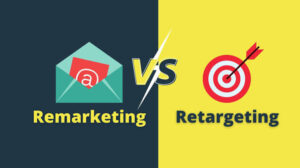
Most website visitors do not convert on their first visit. Retargeting — serving ads to people who have previously engaged with your brand — recaptures a portion of this lost opportunity at a fraction of the cost of acquiring new traffic.
Retargeting campaigns consistently achieve the highest conversion rates and lowest costs per acquisition of any performance marketing tactic. This is because you are reaching people who have already demonstrated interest — they visited your website, viewed a product, watched a video, or engaged with your content. They know who you are. They just need a reason to come back.
Segmenting retargeting audiences by behavior produces better results than retargeting all website visitors with the same message. Someone who abandoned a cart deserves a different message — potentially including a time-limited incentive — than someone who spent thirty seconds on your homepage before leaving. Someone who visited your pricing page three times is closer to a decision than someone who read a blog post.
Dynamic retargeting takes personalization further by automatically generating ads that show the specific products or content the visitor viewed during their visit. For e-commerce businesses, dynamic retargeting is one of the highest-return tactics available.
Measuring Performance Marketing Results
Performance marketing is defined by measurement. These are the metrics that matter most.
Return on ad spend — ROAS — measures how much revenue is generated for every dollar of advertising investment. A ROAS of five means that five dollars in revenue is generated for every one dollar spent. ROAS targets vary by business based on margins and economics, but having a clear ROAS benchmark for each channel and campaign is fundamental to evaluating performance.
Cost per acquisition — CPA — measures how much it costs to acquire one customer or conversion. CPA must be evaluated in the context of customer lifetime value. A CPA of one hundred dollars is excellent if the customer is worth five hundred dollars over their lifetime and catastrophic if they are worth eighty dollars.
Conversion rate measures what percentage of visitors complete the desired action. Improving conversion rate — through landing page optimization, better audience targeting, or stronger creative — directly reduces CPA without requiring more traffic.
Click-through rate — CTR — measures what percentage of people who see an ad click on it. High CTR indicates creative and messaging relevance. Low CTR signals that the ad is not connecting with the audience and needs to be refined.
Customer lifetime value is not a campaign metric but it is the most important context for interpreting campaign metrics. Knowing what a customer is worth over time allows you to set rational acquisition cost targets and make confident decisions about how aggressively to invest in growth.
Common Performance Marketing Mistakes to Avoid
Even experienced marketers make predictable mistakes that undermine performance marketing results.
Optimizing for the wrong metric is perhaps the most expensive mistake. Optimizing for clicks rather than conversions produces traffic that does not buy. Optimizing for low CPA without considering customer quality can attract customers who churn quickly, cancel subscriptions, or return products. Always optimize for the metric that is most directly connected to business value.
Stopping tests too early is a persistent mistake in performance marketing. Statistical significance requires sufficient data. Pausing a campaign or declaring a test winner after a few days and a handful of conversions produces unreliable conclusions. Allow enough time and volume for results to be meaningful before drawing conclusions.
Ignoring the full funnel is a strategic error. Focusing exclusively on bottom-funnel conversion campaigns while neglecting awareness and consideration stages starves the funnel of new prospects. The most efficient performance marketing programs invest across all stages of the funnel, recognizing that today’s awareness investment is tomorrow’s conversion.
Failing to refresh creative leads to performance decay over time. As audiences see the same ads repeatedly, engagement drops and costs rise. Maintaining a pipeline of new creative and proactively refreshing campaigns before fatigue sets in sustains performance over time.
Conclusion: Performance Marketing as a Revenue Engine
Performance marketing at its best is not a cost center — it is a revenue engine. A system that takes in advertising investment at one end and produces predictable, measurable, scalable revenue at the other.
Building that system requires clear goals, rigorous measurement, disciplined optimization, and the patience to let data accumulate before drawing conclusions. It requires investment in the channels, tactics, and creative that the data shows are working — and the discipline to cut what is not.
The businesses that build strong performance marketing capabilities do not just generate more sales and revenue in the short term. They build a proprietary understanding of their customers, their channels, and their economics that compounds into a durable competitive advantage over time.
Start with measurement. Build your foundation. Test rigorously. Follow the data.