


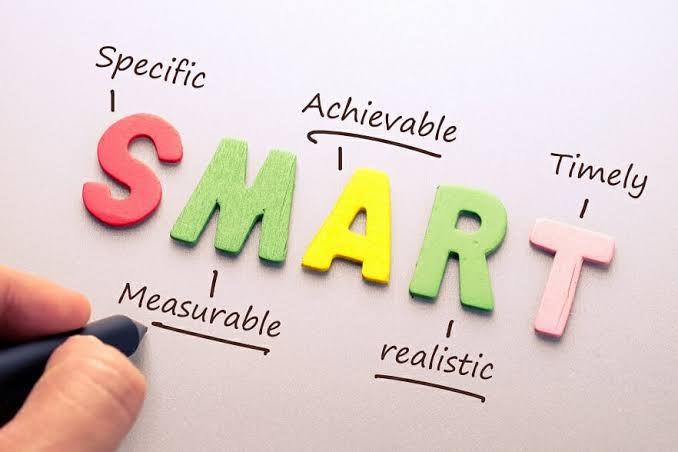
What is the SMART Method? Setting Goals the Right Way
“I will make more money this year.” “I will take care of my health.” “I will grow my business.”
These sentences sound familiar. They are said at the beginning of every year. They are forgotten every year. The same sentences are repeated every year.
The problem is not that the desire in these sentences is wrong. The problem is that the goal is not structured like a goal.
“Making more money” is a wish. “Increasing my monthly income from $2,000 to $3,000 over the next 6 months,” prepared using the SMART method, is a goal.
This difference changes lives. It changes careers. It changes businesses.
In this article, we explain everything from start to finish: what the SMART method is, what each letter stands for, how to apply it, and which mistakes to avoid.
What is the SMART Method?
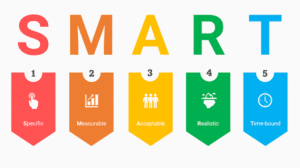
SMART is an acronym consisting of five English words. Each letter represents a criterion for effective goal setting.
S — Specific
M — Measurable
A — Achievable
R — Relevant
T — Time-bound
The SMART method was first introduced in 1981 by George T. Doran in his Management Review article, “There’s a S.M.A.R.T. Way to Write Management’s Goals and Objectives.” Since then, this framework has evolved into the world’s most widely used goal-setting methodology.
The SMART method is used across every field — from business management to personal development, and from project management to marketing campaigns. This is because the human brain is better wired to focus on concrete, measurable, and time-bound goals rather than vague ones.
S — Specific
The first element of SMART is specificity. The more precise and concrete your goal is, the higher your probability of achieving it.
A non-specific goal points us down no road. “I will improve my social media” — what does that mean? What will you improve? Instagram or LinkedIn? How much will you improve it? By when?
To set a specific goal, ask yourself six questions:
Who is involved in this goal?
What do you want to achieve?
Where will it take place?
When will it start and end?
Why are you setting this goal?
Which resources or constraints are involved?
Example:
Vague: “I will grow my Instagram account.”
Specific: “I will gain 500 new followers on my Instagram account within a 3-month period. To do this, I will publish 1 post every day and shoot 3 Reels every week.”
The difference is clear. The first sentence gives no direction. The second tells you precisely what needs to be done every day.
M — Measurable
Measurability is one of the most powerful elements of SMART. You cannot manage what you cannot measure. You cannot improve what you cannot manage.
A measurable goal gives you two capabilities. First — tracking your progress. How much did you advance each day, week, or month? Without this data, it is impossible to answer the question, “Am I at the beginning, the middle, or the end of the road?” Second — knowing when you have achieved the goal. An unmeasured goal is never truly completed because you don’t know when to say “it is done.”
A measure can be quantitative: “Increasing monthly income to $2,000,” “Gaining 500 new followers,” “Losing 10 kg.” A measure can also be qualitative — but in this case, it must be translated into a metric. “Increasing customer satisfaction” — how is it measured? “Raising the average score on the customer satisfaction survey from 7/10 to 9/10” — this is measurable.
Example:
Not Measurable: “I will read more books.”
Measurable: “I will read 24 books this year — 2 books per month.”
A — Achievable
Your goal must be realistic. Not too easy — it won’t push you. Not too difficult — it will discourage you.
The “Achievable” criterion is sometimes misunderstood. “Dream big, see nothing as impossible” — this motivational talk does not fit the SMART context. In SMART, an achievable goal is a realistic extension from your current position using your available resources.
This does not mean setting unenthusiastic, tiny goals. It does not mean your goal shouldn’t stretch you. However, physically impossible goals — “losing 30 kg in 1 month,” “learning five languages starting tomorrow” — create initial motivation followed by frustration.
When setting an achievable goal, look for answers to these questions: What resources do I possess to achieve this goal? Are these resources sufficient? If not, what auxiliary resources can I acquire? How does this goal compare with the achievements of my peers? Has someone in a similar situation realized this goal?
Example: Your current monthly income is $1,000.
Not Achievable: “I will increase my monthly income to $10,000 this month.”
Achievable: “I will increase my monthly income from $1,000 to $1,500 over the next 3 months.”
R — Relevant
The relevant criterion checks whether your goal aligns with your overarching objectives, values, and life plan.
Many people adopt other people’s goals as their own. You focus on Instagram because your competitor focuses on Instagram. You want an MBA because your friend is getting one. You run ads on Channel A because everyone else in the sector does.
But is this goal relevant to you? Does it serve your business objectives? Does it harmonize with your values? Can you execute it with your resources?
When setting a relevant goal, ask: Why is this goal important to me? How does this goal support my other objectives? Is this the right time to set this goal? Will I stand behind this goal?
Example: The marketing director of a law firm might set a goal to “gain 10,000 followers on TikTok.” However, this goal is not relevant if the law firm’s target audience does not use TikTok. A relevant goal would be “establishing contact with 500 potential clients on LinkedIn within a 3-month period.”
T — Time-bound
A goal without a deadline is a wish postponed indefinitely. “Someday” never arrives.
A deadline gives two things to your goal. First — a sense of urgency. The mindset of “if I don’t do it today, I’ll do it tomorrow” is the enemy of timeless goals. A deadline eliminates this procrastination. Second — an evaluation framework. Without a timeframe, when will you evaluate the outcome?
Deadlines must be concrete. “Soon,” “this year,” “in the near future” — these are not deadlines. “By December 31, 2025,” “within 3 months,” “by the end of the next quarter” — these are deadlines.
For large goals, set intermediate milestones. “Earning $100,000 in 2 years” is a big goal. But breaking this goal down into quarterly and monthly parts provides the opportunity to see how much progress you have made at every point.
Example:
Without Deadline: “One day I will start my own business.”
Time-bound: “By March 2025 I will complete my business plan, by April I will finish registration, and by June I will acquire my first client.”
SMART Goal Examples
Seeing theory in practice is the best way to learn. Let’s look at SMART goal examples from various fields.
Business Sales Goal:
Vague: “I will increase sales.”
SMART: “I will increase monthly sales revenue from $50,000 to $70,000 in the second quarter of 2025. To do this, I will meet with 10 new potential clients every week and run a monthly email campaign.”
Marketing Goal:
Vague: “I will make my social media active.”
SMART: “I will grow my LinkedIn account from 1,000 followers to 2,500 followers within 3 months. To achieve this, I will publish content 3 times a week and spend 20 minutes every day commenting on other people’s posts.”
Personal Development Goal:
Vague: “I will improve my English.”
SMART: “I will score 6.5 on the IELTS exam within 6 months. To do this, I will study English for 1 hour every day — 30 minutes of reading, 30 minutes of listening.”
Health Goal:
Vague: “I will incorporate sports into my life.”
SMART: “I will work out 4 times a week for 45 minutes over the next 3 months — 2 strength workouts, 2 cardio sessions. I will measure and record my weight every month.”
Financial Goal:
Vague: “I will save more money.”
SMART: “I will create a $10,000 emergency fund by the end of 2025. To do this, I will transfer 20% of my income — approximately $600 — into a separate account every month.”
Criticisms of the SMART Method
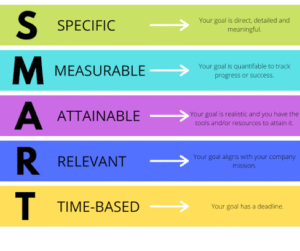
SMART is a powerful framework. But like every tool, it has limitations. Knowing these limitations helps you use the method more intelligently.
It can limit creativity: SMART demands goals that are so concrete and measurable that sometimes large, transformative, visionary goals do not fully fit this framework. “Making the world a better place” is not a SMART goal, but it can be a powerful vision.
It undervalues the process: SMART is outcome-oriented. But sometimes the process — development, learning, trying — is just as valuable as the result itself. What you learn without reaching the goal of “gaining 500 followers” may be more valuable than what you actually gained. SMART does not acknowledge this nuance.
It is not equally effective for every field: Creative fields, research, innovation — for these, the rigid framework of SMART can sometimes create an obstacle. “Finding a new product idea” cannot easily be made SMART; idea discovery is a non-linear process.
It ignores external factors: Your SMART goal can be disrupted by uncontrollable external factors, such as a market crash, health problems, or a pandemic. The model does not fully account for this reality.
Beyond SMART: SMARTER and Other Extensions
Over time, the SMART model expanded. Several popular versions exist.
SMARTER Version includes two additional elements: E for Evaluated (the goal should be reviewed regularly; assess progress toward the goal every month or quarter) and R for Reviewed/Readjusted (update the goal when necessary as a result of evaluation; if conditions or resources change, it is wise to adjust the goal to match reality).
FAST (Frequently discussed, Ambitious, Specific, Transparent) is an alternative popularized by Google. This model emphasizes that goals should be discussed frequently, be bold, and be shared transparently.
OKR (Objectives and Key Results) is a framework developed by Google, Intel, and Andy Grove. Widely adopted as an alternative to SMART, OKRs combine large, inspiring Objectives with measurable Key Results, making them exceptionally strong for company-level goal setting.
The Practical Process of Setting Goals with SMART Method
Theory is enough. Here is how a SMART goal is prepared step-by-step:
First step — Brainstorming: Write down what you want without any filters. Do not think about SMART criteria at this stage; simply put your desires, dreams, and targets on paper.
Second step — Prioritization: Choose the most important target among all your desires. Trying to turn everything into a SMART goal at the same time results in focusing on none of them.
Third step — Adaptation to the SMART Framework: Rewrite your chosen goal according to SMART criteria. Check every element: Is it specific? Is it measurable? Is it realistic? Is it relevant? Is it time-bound?
Fourth step — Breaking down into small steps: Convert the large SMART goal into a monthly, weekly, and daily action plan. “Gaining 1,500 followers in 3 months” means roughly 500 per month, 125 per week, and about 17 new followers per day. Through which activities will you realize this daily action?
Fifth step — Setting up a tracking system: Where will you track your goal? A notebook, Excel, Notion, Trello — which system suits you? Without a tracking system, a SMART goal is quickly forgotten.
Sixth step — Regular evaluation: Check how close you are to your goal every week or every month. Is there progress? If not, why? Is it necessary to update the plan?
Why Does the SMART Method Work?
Understanding why SMART is effective psychologically helps you use the method more smartly.
The brain loves specificity: Vague goals do not activate the brain. “Becoming more successful” — the brain does not build a plan for this. But “increasing my 6-month income by 30%” causes the brain to start searching for concrete steps.
Measurement triggers dopamine: Every progression — every measured step — is a small reward for the brain. This reward maintains motivation. Your follower count went from 200 to 300 — seeing this progress motivates you to keep going.
Deadlines prevent procrastination: Psychological research shows that procrastination is much stronger with timeless tasks. A task with a deadline creates a much stronger feeling of “let me start right away.”
Conclusion: SMART Turns a Wish into a Goal

“I will make more money this year” — this is a wish. The brain doesn’t take it seriously. No plan is built. No step is taken. The same year passes all over again.
“By June 30, 2025, I will increase my monthly income from $2,000 to $2,800. To do this, I will meet with 2 new clients every week, prepare 1 new service package per month, and conduct a customer satisfaction survey every month” — this is a goal. When the brain hears this sentence, it behaves differently. A plan is built. Steps become visible. Action begins.
The power of the SMART method goes far beyond a technical framework. This method turns vague wishes into concrete plans. It connects distant targets to daily actions. It makes progress visible. It keeps motivation alive.
Take one wish today. Fit it into the SMART framework. Write it down. Set up a tracking system.
The exact moment a wish turns into a goal is that moment.