


How Do SEO Services Impact Business Growth?
In an increasingly competitive digital environment, having a website is no longer enough for a business to succeed online. Potential customers need to be able to find that website when they search for relevant products, services, or solutions. This is where Search Engine Optimization (SEO) becomes an important part of a long-term digital marketing strategy.
SEO helps businesses improve their visibility in search engines, attract relevant organic traffic, reach potential customers, and strengthen their online presence. When implemented strategically, SEO can support lead generation, sales, brand awareness, and sustainable business growth.
But how do SEO services impact business growth? To understand their value, it is important to look beyond rankings and examine how SEO contributes to the entire customer acquisition process.
What Are SEO Services?
SEO services are professional activities designed to improve a website’s visibility and performance in organic search results.
SEO is not limited to adding keywords to website content. A complete SEO strategy may involve technical improvements, content optimization, keyword research, competitor analysis, link building, user experience improvements, and continuous performance monitoring.
Professional SEO services may include:
- SEO audits
- Keyword research
- Competitor analysis
- On-Page SEO
- Technical SEO
- Off-Page SEO
- Content optimization
- Internal linking
- Local SEO
- E-commerce SEO
- Website performance analysis
- Search Console monitoring
- SEO reporting
The exact strategy should depend on the website, industry, competition, target audience, and business objectives.
Why Is SEO Important for Business Growth?
Search engines connect businesses with people who are actively looking for information, products, and services.
For example, someone searching for:
“digital marketing agency”
may be comparing potential service providers.
A user searching for:
“SEO services for small businesses”
may have an even more specific commercial need.
If your website appears for relevant searches, your business has an opportunity to attract these users before they choose a competitor.
The process can be summarized as:
Search → Visibility → Click → Website Visit → Lead → Customer → Revenue
SEO supports the early stages of this customer acquisition journey by making the business easier to discover.
SEO Increases Organic Visibility
One of the primary objectives of SEO is to increase a website’s visibility in organic search results.
A business may offer excellent products or services, but if potential customers cannot discover its website, its digital growth opportunities can be limited.
SEO helps search engines understand what individual pages are about and which search queries they may be relevant to.
This involves optimizing page content, technical infrastructure, internal links, metadata, site architecture, and other elements.
Greater visibility across relevant search queries can create more opportunities for potential customers to discover the business.
SEO Can Increase Relevant Website Traffic
Increasing traffic is useful only when the visitors are relevant to the business.
A website receiving thousands of visits from people with no interest in its products or services may generate little commercial value.
SEO therefore focuses not only on traffic volume but also on traffic quality.
Keyword research and Search Intent analysis can help businesses identify what potential customers search for at different stages of their journey.
For example:
“What is SEO?” – primarily informational intent.
“Best SEO tools” – research or commercial investigation.
“SEO agency” – stronger commercial intent.
“SEO services” – potentially service-focused commercial intent.
Targeting relevant queries helps businesses attract users who are more closely aligned with their products and services.
SEO Helps Businesses Generate Leads
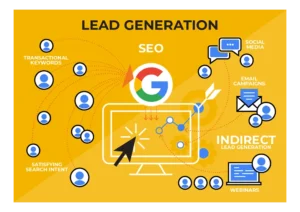
For service-based businesses, one of the most important goals of SEO is often Lead Generation.
A potential customer may discover a business through a blog article, service page, local search result, or another organic landing page.
The visitor can then be guided toward an action such as:
- Completing a contact form
- Calling the business
- Requesting a quote
- Booking a consultation
- Sending a message
- Requesting a demo
For example:
Google Search → SEO Landing Page → Service Information → CTA → Lead
This means SEO should be connected to the website’s overall conversion strategy.
Generating organic traffic without providing visitors with a clear next step can limit the commercial impact of SEO.
SEO Can Support Sales Growth
SEO does not automatically guarantee sales. Sales depend on many factors, including pricing, product quality, competition, website experience, brand reputation, and the effectiveness of the sales process.
However, SEO can support sales by bringing potential customers to relevant product and service pages.
Consider an e-commerce business.
A customer searching for a specific product may already have a stronger purchase intention than someone casually browsing social media.
If an optimized product or category page appears for that search, the business has an opportunity to attract a user who may be closer to making a purchase.
For service companies, commercial keywords can similarly bring users who are actively searching for a solution.
The objective is therefore not simply:
More Traffic
but rather:
Relevant Traffic → Qualified Leads → Customers → Revenue
SEO Helps Businesses Reach Customers at Different Stages
Not every potential customer is immediately ready to buy.
The customer journey can include several stages, from discovering a problem to comparing solutions and eventually choosing a provider.
SEO can create visibility throughout this process.
For example, a business offering SEO services could target:
Awareness: “Why is my website not ranking on Google?”
Consideration: “How can I improve my Google rankings?”
Commercial Research: “SEO agency vs in-house SEO”
Decision: “Professional SEO services”
By creating content for different search intents, businesses can interact with potential customers before they reach the final purchasing stage.
Keyword Research Connects SEO With Business Goals
Keyword research is one of the foundations of an effective SEO strategy.
However, keyword selection should not be based only on search volume.
A keyword with 10,000 monthly searches may generate less business value than a highly relevant commercial keyword with 500 searches.
Businesses should consider factors such as:
- Search Intent
- Relevance
- Competition
- Search volume
- Commercial value
- Customer journey stage
- Conversion potential
This helps SEO strategies focus on keywords that can contribute to actual business objectives.
On-Page SEO Improves Page Relevance
On-Page SEO involves optimizing individual website pages for users and search engines.
This may include:
- Page titles
- Meta descriptions
- H1-H3 headings
- Content
- URLs
- Images
- Internal links
- Keyword relevance
- Search Intent alignment
For example, a page targeting “SEO services” should clearly explain what the service includes, who it is for, what problems it addresses, and how potential customers can take the next step.
Good On-Page SEO helps search engines understand page content while also improving the information available to users.
Technical SEO Creates a Strong Foundation

A website can have excellent content but still struggle in organic search if serious technical problems prevent search engines from accessing or understanding it.
Technical SEO focuses on the technical infrastructure that supports crawling, indexing, performance, and user experience.
Important areas may include:
- Crawlability
- Indexability
- XML sitemap
- Robots.txt
- Canonical tags
- Redirects
- 404 errors
- HTTPS
- Mobile compatibility
- Page speed
- Core Web Vitals
- Structured data
- Site architecture
Technical SEO is particularly important for large e-commerce websites and websites containing thousands of URLs.
Resolving technical issues creates a stronger foundation for other SEO activities.
Content Marketing and SEO Support Each Other
SEO and content marketing are closely connected.
Potential customers search for questions, problems, comparisons, products, and services. Content allows businesses to create relevant pages for those searches.
For example, an SEO agency might publish articles such as:
“Why Is My Website Not Ranking on Google?”
“How Long Does SEO Take?”
“What Is Technical SEO?”
“SEO vs Google Ads: Which Is Better?”
These articles can attract informational organic traffic while strategically directing relevant users toward commercial service pages.
Internal links can connect educational content with services.
For example:
If your business wants to improve organic visibility and attract more relevant customers from search engines, explore our professional SEO services to learn how a tailored strategy can support your growth.
The phrase “professional SEO services” can naturally link to your main SEO service page.
Internal Linking Supports SEO and Customer Journeys
Internal linking connects pages within the same website.
From an SEO perspective, internal links help search engines discover pages and understand relationships between different topics.
From a user perspective, they help visitors find additional relevant information.
For example, a blog article about website traffic can link to an SEO service page, while an SEO service page can link to relevant case studies or supporting content.
A well-planned internal linking structure can create a journey such as:
Blog Article → SEO Service Page → Case Study → Contact Page
This helps connect informational traffic with commercial pages.
SEO Can Strengthen Brand Awareness
SEO is often discussed primarily in terms of traffic and rankings, but it can also support brand awareness.
When users repeatedly see a brand across relevant search results, they may become more familiar with it over time.
A business can appear through service pages, product pages, educational content, local results, and other organic search assets.
This repeated visibility can support brand recognition, especially when the content consistently demonstrates expertise and provides useful information.
SEO Can Build Trust and Authority
Businesses can use SEO-driven content to demonstrate expertise in their industry.
A website containing comprehensive service information, useful guides, case studies, original insights, and accurate content can provide potential customers with more reasons to evaluate the company seriously.
Google’s quality systems also consider signals associated with concepts such as Experience, Expertise, Authoritativeness, and Trustworthiness (E-E-A-T) when evaluating content quality.
Businesses should therefore focus on genuinely useful and trustworthy content rather than creating pages purely to target keywords.
Local SEO Can Help Businesses Attract Nearby Customers
For businesses serving specific geographic areas, Local SEO can be an important growth channel.
Examples include:
- Restaurants
- Dental clinics
- Beauty salons
- Car rental companies
- Repair services
- Real estate agencies
- Law firms
- Local retailers
Potential customers may search for queries such as:
“dentist near me”
or
“car rental in Baku.”
Local SEO aims to improve visibility for relevant location-based searches.
Optimizing local business information, location pages, reviews, and other local signals can help businesses become easier to discover by nearby customers.
E-commerce SEO Can Support Online Revenue
For e-commerce businesses, SEO can create visibility for product and category searches.
Customers may search for a product category, brand, model, feature, or specific product name.
An e-commerce SEO strategy may focus on:
- Product pages
- Category pages
- Product descriptions
- Internal linking
- Product structured data
- Faceted navigation
- Duplicate content
- Crawl budget
- Image optimization
- Page speed
- Mobile usability
The objective is to make products easier to discover through organic search while providing users with a smooth path toward purchase.
SEO Improves Website Structure and User Experience
Many SEO improvements can also benefit website users.
Clear navigation, logical site architecture, fast pages, mobile compatibility, descriptive headings, useful internal links, and high-quality content make websites easier to use.
This relationship is important because SEO traffic alone does not generate business growth.
If users arrive from Google but cannot understand the website, find relevant information, or complete a desired action, traffic may not convert.
SEO should therefore work together with UX and Conversion Rate Optimization (CRO).
SEO Can Reduce Dependence on Paid Traffic
Paid advertising can provide immediate visibility, but traffic generally depends on continued advertising spend.
SEO works differently.
A well-optimized page that earns strong organic visibility may continue receiving search traffic without paying for every individual click.
This does not mean SEO is free. Businesses may need to invest in content, technical improvements, SEO specialists, tools, digital PR, and other resources.
However, developing organic visibility can help diversify customer acquisition channels and reduce excessive dependence on paid advertising.
SEO and Google Ads Can Work Together
Businesses do not necessarily need to choose between SEO and paid search advertising.
The two channels can support different objectives.
Google Ads can provide faster paid visibility for selected searches, while SEO can focus on building longer-term organic visibility.
Search advertising data may also provide insights into keywords and landing pages that generate conversions. SEO data can similarly reveal customer search behavior that may be useful for paid campaigns.
An integrated SEO + SEM approach can therefore provide broader search visibility.
SEO Provides Valuable Customer Insights
SEO data can reveal how people search for products, services, problems, and information.
Google Search Console, GA4, and SEO platforms can provide insights into:
- Search queries
- Organic landing pages
- Clicks
- Impressions
- CTR
- User behavior
- Conversions
- Content performance
These insights can support decisions beyond SEO.
For example, frequently searched questions may inspire new services, FAQ content, advertising messages, product improvements, or social media topics.
SEO can therefore become a valuable source of market and customer intelligence.
How Do SEO Services Support Long-Term Growth?
SEO is generally a long-term strategy rather than a one-time activity.
Search behavior changes. Competitors publish new content. Websites develop technical issues. Search engines update their systems. New products and services are introduced.
Businesses therefore need to monitor and improve their organic search presence continuously.
A long-term SEO process may involve:
Research → Strategy → Optimization → Content → Authority Building → Measurement → Improvement
As the website develops stronger organic visibility across relevant topics, SEO can become an increasingly important part of the customer acquisition ecosystem.
How Can Professional SEO Services Help?
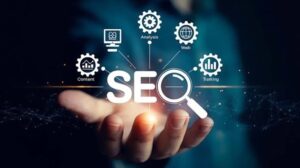
Effective SEO requires coordination across technical optimization, content, keyword strategy, analytics, user experience, and authority building.
A professional SEO process typically begins with understanding the business itself.
Questions may include:
What does the business sell?
Who are the target customers?
What do they search for?
Who are the organic competitors?
Which products or services generate the most value?
What technical problems currently affect the website?
The answers help create an SEO strategy aligned with business goals instead of focusing only on rankings.
If your company wants to increase organic visibility, attract relevant traffic, and build a sustainable search strategy, learn more about our SEO services and discover how search optimization can support your business objectives.
How Should Businesses Measure SEO Success?
Keyword rankings are useful indicators, but they should not be the only way SEO performance is measured.
Business-focused SEO KPIs can include:
Organic Traffic – visitors arriving from organic search.
Impressions – how often pages appear in search results.
Organic CTR – the percentage of impressions that result in clicks.
Organic Conversions – leads, purchases, registrations, or other valuable actions generated through organic search.
Conversion Rate – the percentage of organic visitors completing desired actions.
Organic Revenue – revenue attributed to organic search.
Qualified Leads – leads that match the business’s target customer profile.
The correct metrics depend on the company’s objectives.
For an e-commerce business, revenue and transactions may be primary KPIs. For a B2B company, qualified leads and consultation requests may be more important.
Common SEO Mistakes That Can Limit Business Growth
SEO strategies can fail when businesses focus on individual tactics without considering overall business objectives.
Common mistakes include targeting irrelevant high-volume keywords, publishing low-value content, ignoring technical SEO, creating duplicate pages, overusing keywords, neglecting Search Intent, and failing to track conversions.
Another major mistake is measuring success only through rankings.
Ranking number one for a keyword that generates no qualified traffic or conversions may have limited commercial value.
SEO should ultimately connect organic visibility with meaningful business outcomes.
Is SEO Worth the Investment?
The value of SEO depends on the business model, market demand, competition, website quality, and strategy.
SEO can be particularly valuable when potential customers actively use search engines to research or purchase the products and services a business provides.
However, businesses should approach SEO as an investment in long-term digital visibility rather than expecting immediate results.
The objective is to build an organic acquisition channel capable of supporting the business over time.
Conclusion
SEO services can impact business growth by improving search visibility, attracting relevant organic traffic, generating leads, supporting sales, increasing brand awareness, and strengthening a company’s overall digital presence.
However, effective SEO is not simply about ranking higher on Google.
A business-focused SEO strategy should connect:
Search Visibility → Relevant Traffic → User Experience → Conversion → Customer → Revenue
Technical SEO, content, keyword research, internal linking, authority building, UX, and analytics all contribute to this process.
When SEO is aligned with real business objectives and continuously optimized based on data, it can become a sustainable component of long-term digital growth.
If your business wants to improve its Google visibility and reach more potential customers through organic search, explore our professional SEO services to learn how a customized SEO strategy can support your growth.
Frequently Asked Questions
How can SEO help a business grow?
SEO can help businesses increase organic search visibility, attract relevant website visitors, generate potential customers, strengthen brand awareness, and support online sales.
Can SEO increase sales?
SEO can attract users searching for relevant products and services. Whether those visitors become customers also depends on factors such as pricing, website experience, brand trust, product quality, and conversion strategy.
How long does SEO take to work?
SEO timelines vary depending on website condition, competition, industry, content quality, technical issues, and the strategy being implemented. SEO should generally be viewed as an ongoing, long-term process.
What do professional SEO services include?
SEO services may include SEO audits, keyword research, competitor analysis, On-Page SEO, Technical SEO, content optimization, internal linking, Off-Page SEO, Local SEO, and performance monitoring.
Is SEO better than paid advertising?
SEO and paid advertising serve different purposes. SEO focuses on developing organic visibility, while paid advertising provides visibility through advertising spend. Many businesses use both as part of an integrated digital marketing strategy.
Why is organic traffic important?
Organic traffic can bring users to a website when they search for relevant information, products, or services. When the search intent matches the business offer, this traffic can contribute to leads, sales, and long-term customer acquisition.