


Why Does Your Business Need a Professional Website?
In today’s digital world, a professional website is one of the most important assets a business can have. Before contacting a company, purchasing a product, or requesting a service, potential customers often search online to learn more about the business. Your website can therefore become one of the first places where customers interact with your brand.
A professional website is more than an online presentation of your company. It can help build credibility, increase online visibility, showcase products and services, generate leads, support digital marketing campaigns, and create new sales opportunities.
Whether you run a small local business, an e-commerce store, a B2B company, or a growing brand, having a well-designed and properly optimized website can support your long-term digital growth.
So, why does your business need a professional website? Let’s explore the main benefits.
What Is a Professional Website?
A professional website is a website designed and developed according to the goals, target audience, branding, and technical requirements of a business.
It should not only look attractive. A successful business website should also be fast, secure, mobile-friendly, easy to navigate, and optimized for search engines.
Depending on the business, a professional website may include:
- Home and About pages
- Product or service pages
- Contact information
- Contact and lead generation forms
- Blog content
- Customer reviews
- Portfolio or case studies
- Frequently Asked Questions
- E-commerce functionality
- Calls to action
- Social media integrations
The exact structure should depend on what the business wants users to do after visiting the website.
Why Is a Professional Website Important for Business?
Consumer behavior has changed significantly with the growth of digital technologies. People can now research businesses, compare products, read reviews, and evaluate alternatives before making a purchasing decision.
If potential customers search for your company and cannot find a useful and trustworthy website, you may lose an opportunity to introduce your products or services.
A professional website gives your business a central digital platform where customers can learn who you are, what you offer, and how they can contact or purchase from you.
A Professional Website Builds Business Credibility
Trust plays an important role in purchasing decisions, especially when a customer is discovering a business for the first time.
Imagine finding two companies offering similar services. One has a modern website with detailed service information, contact details, case studies, and customer testimonials. The other has little or no professional online presence.
The quality of the website can influence the first impression users form about these businesses.
A professional website can display important trust signals such as company information, previous projects, customer testimonials, certifications, business contact information, and transparent service descriptions.
This does not automatically guarantee customer trust, but it gives potential customers more information to evaluate your business.
Your Website Is Available 24/7
Unlike a physical office or store, a website can provide information about your business at any time.
Potential customers can visit your website outside normal business hours to explore services, compare products, read content, submit an inquiry, or make a purchase when e-commerce functionality is available.
Your website therefore acts as a digital business presence that continues providing information even when your physical location is closed.
This can be especially valuable for companies serving customers from different locations or time zones.
A Website Helps Customers Find Your Business on Google

One of the biggest advantages of having a website is the opportunity to gain visibility in search engines.
When people need a product or service, they often search for it on Google. Search Engine Optimization, or SEO, helps improve a website so that relevant pages can appear for appropriate search queries.
For example, if your company provides accounting services, potential customers may search for phrases related to accounting services in their location.
If your website has relevant, useful, and properly optimized service pages, it has an opportunity to appear when those searches happen.
The process can look like this:
Google Search → Website → Service Page → Interest → Inquiry → Potential Customer
This is why SEO should be considered during the website development process rather than treated only as something to add after a website has been launched.
A Professional Website Can Generate Leads
A business website should not only provide information. It can also be designed to convert visitors into potential customers.
This process is known as lead generation.
For example, a potential customer may visit a service page and complete a contact form, request a quote, call the company, send a message, or book a consultation.
Clear Calls to Action (CTAs) can guide visitors toward these actions.
Examples include:
Request a Quote
Contact Us
Book a Consultation
Get Started
Learn More About Our Services
A well-structured website makes it easy for users to understand what they should do next.
A Professional Website Supports Sales

The relationship between a website and sales is not simply about attracting as many visitors as possible.
Traffic needs to be relevant, and visitors need a clear path toward conversion.
For service businesses, a website can explain the service, answer common questions, present previous work, demonstrate expertise, and encourage visitors to contact the company.
For e-commerce businesses, the website can take customers through the entire purchasing journey:
Product Discovery → Product Page → Cart → Checkout → Purchase
Reducing unnecessary friction throughout this process can improve the overall customer experience and support conversions.
Website Development Should Focus on Business Goals
Every website should be built around a clear purpose.
Before starting development, businesses should determine what they want the website to achieve.
Possible goals include:
- Generating leads
- Selling products online
- Increasing brand awareness
- Presenting services
- Building credibility
- Providing customer information
- Receiving bookings
- Building an audience through content
These goals influence website architecture, functionality, content, design, and Calls to Action.
Professional website development services can help businesses create websites based on their specific objectives rather than simply using a generic template without a clear strategy.
The phrase “website development services” can be linked directly to your service page.
Mobile-Friendly Website Design Is Essential
A professional website should provide a good experience across smartphones, tablets, laptops, and desktop computers.
This is known as responsive web design.
A responsive website automatically adjusts its layout according to the user’s screen size.
On mobile devices, users should be able to read content, navigate menus, complete forms, and click buttons without difficulty.
Mobile optimization is also important for SEO because Google primarily uses the mobile version of website content for indexing and ranking.
Therefore, mobile-friendly design should be considered from the beginning of the website development process.
Website Speed Affects User Experience
Page speed is another important element of professional website development.
Users expect websites to load quickly. A slow website can create a frustrating experience and may cause visitors to leave before interacting with the page.
Website performance can be affected by factors such as large images, unnecessary scripts, poor hosting, excessive plugins, and inefficient code.
Image optimization, caching, efficient development practices, and suitable hosting infrastructure can help improve website performance.
Performance metrics such as Core Web Vitals can also be monitored to identify areas where the user experience could be improved.
SEO-Friendly Website Development Supports Organic Visibility
A beautiful website has limited value if search engines cannot properly crawl, understand, and index its important pages.
This is why SEO should be integrated into web development.
An SEO-friendly website should consider elements such as:
- Logical site architecture
- SEO-friendly URLs
- Title tags and meta descriptions
- H1, H2, and H3 structure
- Internal linking
- Mobile responsiveness
- Page speed
- XML sitemap
- Robots.txt
- Canonical tags
- Structured data
- Image optimization
- Indexability
- Core Web Vitals
Building these elements correctly from the beginning creates a stronger technical foundation for future SEO activities.
User Experience Can Influence Conversions
User Experience (UX) describes how users experience and interact with a website.
A visitor should be able to understand what your business offers and find important information without unnecessary effort.
Good website UX usually involves clear navigation, readable content, logical page structure, accessible contact information, fast performance, and clear Calls to Action.
For example, if a potential customer wants to request a service but cannot find the contact form, the website may lose a valuable lead.
Website development should therefore consider both visual appearance and usability.
A Website Gives You More Control Over Your Digital Presence
Social media platforms are useful for reaching and communicating with audiences, but businesses do not fully control these platforms.
Algorithms, features, policies, and organic reach can change over time.
A website provides businesses with greater control over their content, structure, branding, and customer journey.
You decide which services to highlight, how products are organized, which content is published, and how visitors move through the website.
For this reason, a website and social media should generally be considered complementary digital channels rather than direct replacements for one another.
A Professional Website Strengthens Your Brand Identity
Your website is an important part of your overall brand identity.
Colors, typography, imagery, tone of voice, layout, and messaging should be consistent with how the business wants to position itself.
For example, a premium brand may require a different visual and content approach from a company competing primarily on affordability.
Consistent branding across your website and other digital channels can make your business easier to recognize and create a more coherent customer experience.
A Website Helps You Present Your Products and Services
A website allows businesses to create dedicated pages for different products and services.
Instead of presenting everything on a single page, separate pages can explain each offering in greater detail.
A digital marketing agency, for example, could have individual pages for:
Social Media Marketing
Each service page can target relevant search queries while providing potential customers with specific information about that service.
This structure benefits both users and search engines because the purpose of each page is clearer.
Content Marketing Becomes More Effective With a Website
A website also provides a platform for publishing educational and informative content.
Blog articles can answer questions potential customers search for before making purchasing decisions.
For example, a website development company could publish content about:
- Website speed
- SEO-friendly web development
- UX/UI design
- E-commerce websites
- Responsive design
- Website security
- Conversion optimization
These articles can attract organic traffic through search engines while internally linking visitors to relevant commercial pages.
For example, a blog article discussing the importance of professional websites can naturally link to a website development services page.
This creates a connection between informational content and commercial pages.
Professional Websites Support Digital Advertising
Businesses running Google Ads, Meta Ads, or other paid campaigns often direct users to their website or a dedicated landing page.
The quality of the destination page can affect the overall effectiveness of the campaign.
For example, if an advertisement promotes a specific service but sends users to a generic homepage, visitors may struggle to find the information promised in the advertisement.
A dedicated landing page can provide a clearer journey:
Advertisement → Landing Page → Offer → CTA → Conversion
This makes website development an important part of the wider digital marketing strategy.
Website Analytics Help Businesses Make Better Decisions
Another major advantage of having a professional website is the ability to measure user behavior.
Analytics platforms can provide information about:
- Website traffic
- Traffic sources
- Popular pages
- User engagement
- Conversions
- Landing page performance
- Marketing campaign results
Google Search Console can also provide information about how the website performs in Google Search, including queries, impressions, clicks, and indexing information.
Instead of relying entirely on assumptions, businesses can use these insights to improve their website and marketing strategy.
Why Is Website Security Important?
Security should be considered during professional website development.
Business websites may process contact forms, user accounts, customer details, payment information, or other sensitive data depending on their functionality.
HTTPS, regular software updates, secure authentication practices, backups, access controls, and appropriate security measures can help reduce website security risks.
For e-commerce and membership websites, security becomes particularly important because more customer information may be processed.
Why Does an E-commerce Business Need a Professional Website?
For an e-commerce business, the website is often the primary sales platform.
Customers need to be able to find products, understand their features, compare options, add products to their cart, and complete checkout with minimal friction.
A professional e-commerce website should therefore focus on product organization, search and filtering, mobile usability, page speed, product information, checkout experience, security, and SEO.
Product and category pages can also be optimized for relevant search queries, helping potential customers discover products through organic search.
When Should a Business Redesign Its Website?
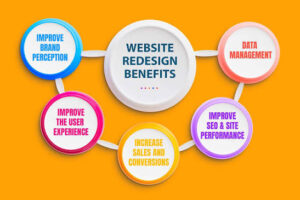
Websites should evolve alongside businesses and user expectations.
A redesign may be worth considering when a website has an outdated appearance, performs poorly on mobile devices, loads slowly, has confusing navigation, no longer represents the brand accurately, or makes it difficult for customers to contact the business.
A redesign should not focus only on changing colors and visual elements.
The process is also an opportunity to improve site architecture, UX, technical SEO, performance, content, and conversion paths.
What Should Professional Website Development Include?
Professional website development should begin with an understanding of the business rather than immediately starting with design.
The development process may include:
Business and competitor analysis → Website strategy → Site architecture → UX/UI design → Development → Content → SEO setup → Testing → Launch → Optimization
The exact process depends on the complexity and goals of the project.
A professional development approach should consider how design, performance, SEO, security, content, and conversions work together.
If your business needs a modern, responsive, SEO-friendly website designed around its goals, you can learn more about our website development services.
Use “website development services” as an internal link to your main service page.
Professional Website vs Cheap Website: What Is the Difference?
Website cost alone does not determine quality.
A lower-cost website may still meet the needs of a simple project, while a more complex business may require custom functionality, integrations, advanced UX, e-commerce systems, or specific technical requirements.
The important question is whether the website meets the business’s actual objectives.
Businesses should consider factors such as performance, scalability, SEO structure, security, usability, technical support, functionality, and long-term maintenance rather than evaluating a website only by its initial price.
A Professional Website Is a Long-Term Digital Asset
Unlike a temporary advertising campaign, a website can continue supporting a business over a long period.
New service pages, products, case studies, blog articles, integrations, and functionality can be added as the company grows.
SEO, content marketing, social media, email marketing, and paid advertising can all direct users toward the website.
This makes the website an important central element of a broader digital marketing ecosystem.
Conclusion
A professional website is more than an online business card. It can become a platform for building credibility, increasing online visibility, generating leads, supporting sales, strengthening brand identity, and connecting multiple digital marketing channels.
However, an effective business website should combine more than attractive design.
Website speed, mobile responsiveness, SEO, UX/UI, security, content structure, analytics, and conversion optimization should all be considered during development.
The goal should be to create a website that not only looks professional but also supports measurable business objectives.
If you want a modern, responsive, SEO-friendly website built around your business goals, explore our website development services to learn more about creating the right digital platform for your company.
Frequently Asked Questions
Why does a business need a professional website?
A professional website helps a business establish an online presence, present its products and services, build credibility, generate leads, and support digital marketing activities.
What makes a website professional?
A professional website should be fast, secure, mobile-friendly, easy to navigate, visually consistent with the brand, SEO-friendly, and designed around clear business objectives.
Can a website help generate more customers?
Yes. A website can attract visitors through SEO, advertising, social media, and other channels and then use service pages, landing pages, forms, and Calls to Action to convert relevant visitors into leads or customers.
Why is SEO important when developing a website?
SEO helps search engines crawl, understand, and index website content. Considering SEO during development can create a stronger technical and structural foundation for organic search visibility.
Should small businesses have a website?
A website can be valuable for businesses of different sizes. For small businesses in particular, it can provide a central place to present services, contact information, customer reviews, and other information potential customers may need before making a decision.